Revenue leakage
Services delivered but never billed, and insurance claims that stall between departments.
Case studies / Saronil Health
Co-founder and design lead of an AI native B2B SaaS for Indian private hospitals
Indian private hospitals run on patchy software that loses money between departments. I co-founded Saronil Health to fix that: one AI native HIS and EMR that runs the whole hospital, from registration to discharge, with Indian compliance built in.

Indian private hospitals run on fragmented legacy software, where revenue leaks between departments and compliance lives outside the system.
Co-founder and design lead. Own the product architecture, design system and AI powered prototyping, from first spec to client demo.
One AI native HIS and EMR covering 28 modules across 10 domains, role based for 8 user types, with Indian compliance designed in.
15+ working modules already used in demos with doctors and hospital clients, all on one design system.
Most Indian private hospitals stitch together legacy software, spreadsheets and paper. The gaps between them are where money and control go missing.
Services delivered but never billed, and insurance claims that stall between departments.
Pharmacy, stores and billing without one source of truth make losses hard to spot.
NABH, DPDP, ABDM, government schemes and GST rules, usually handled outside the software.
Screens that look good in a sales pitch but slow down nurses, doctors and billing desks.
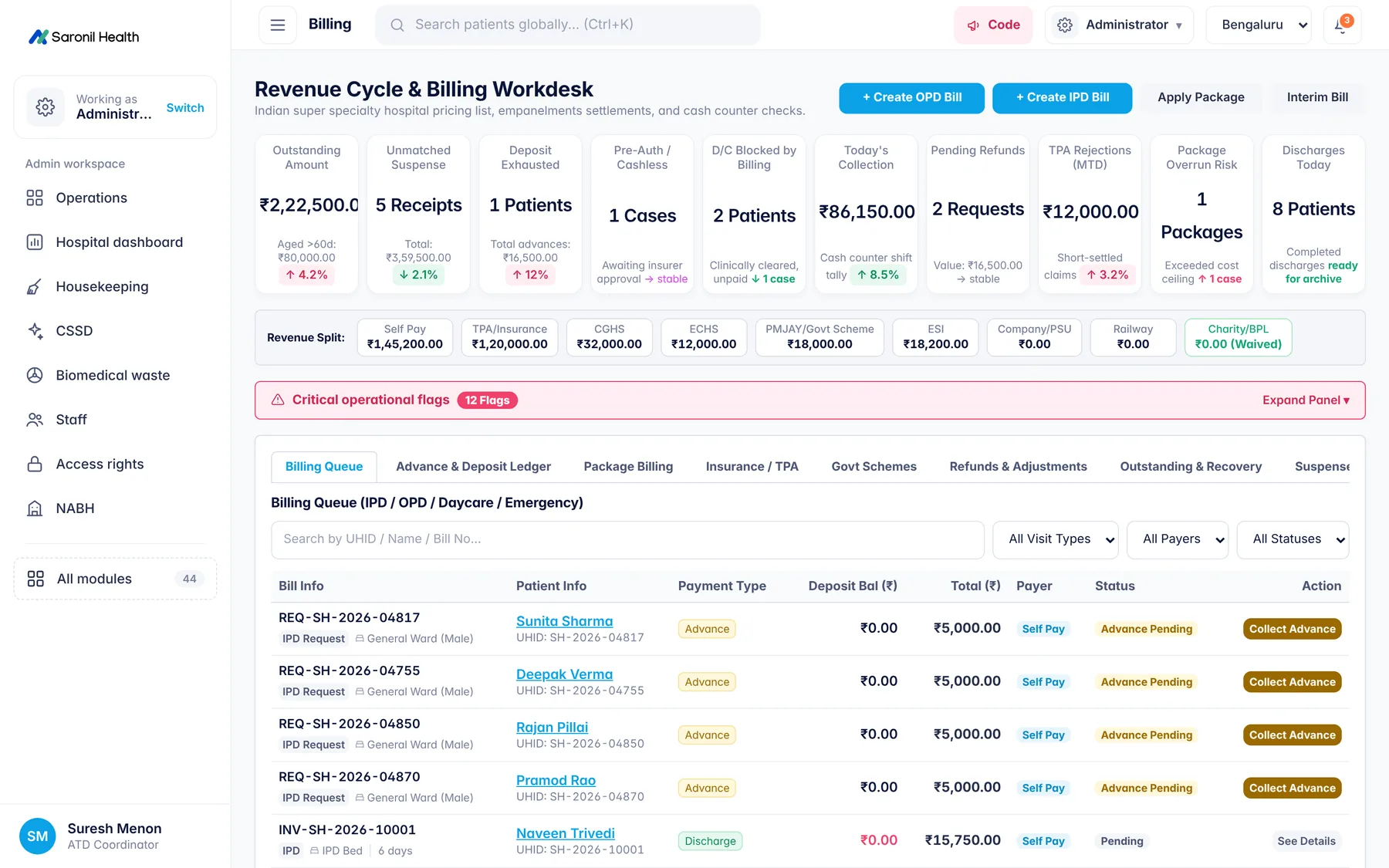
As co-founder I own product design end to end, and use AI to move from idea to working product fast.
Defined the full information architecture: 28 modules across 10 domains, screen inventories and field level specs.
One shared system across every module: IBM Plex typography, colour tokens per module and a common component vocabulary.
Wrote structured specs that AI build tools turn into working, clickable modules for demos with doctors and hospital clients.
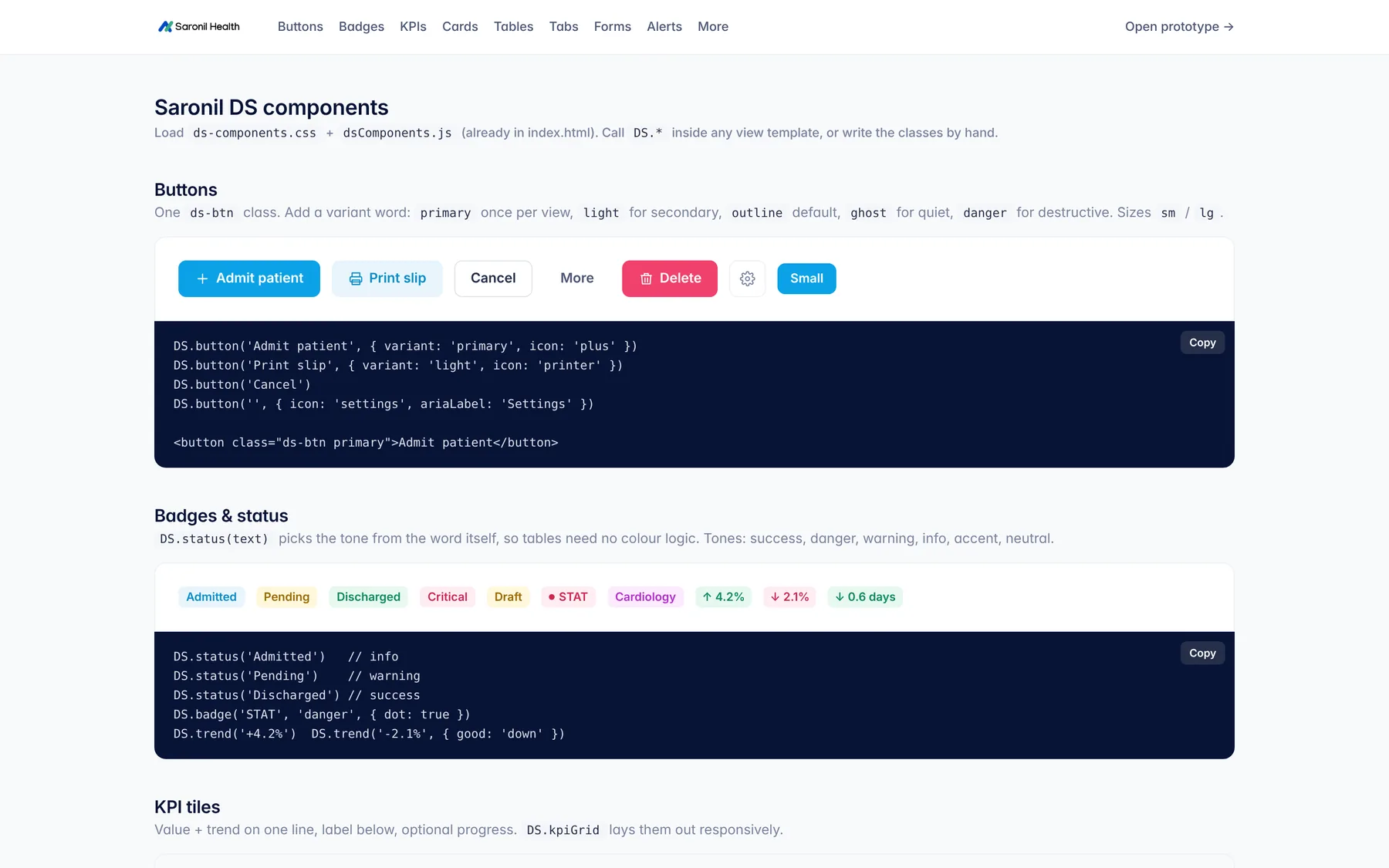
A selection of the modules designed and prototyped so far, grouped by where they sit in the hospital.
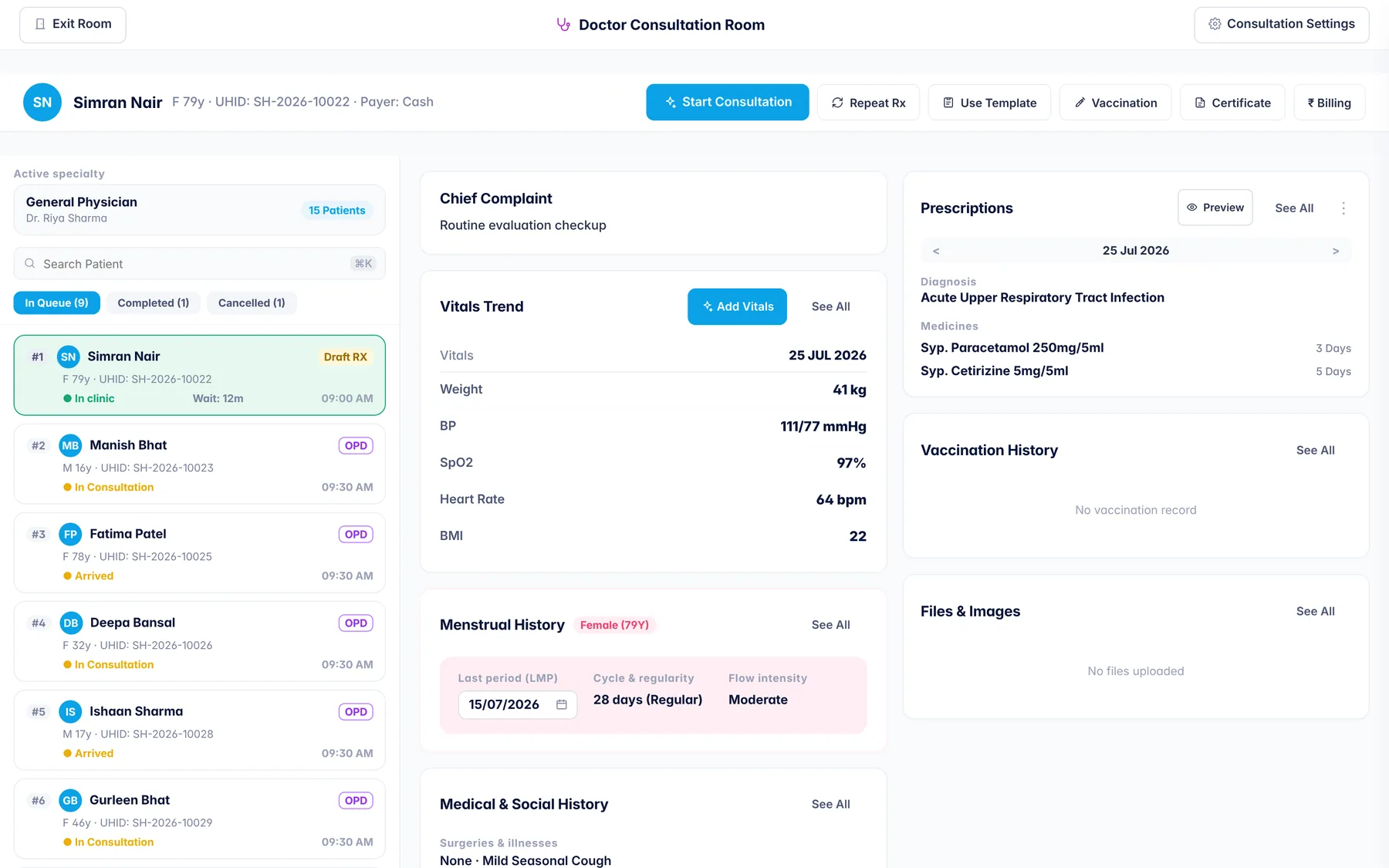
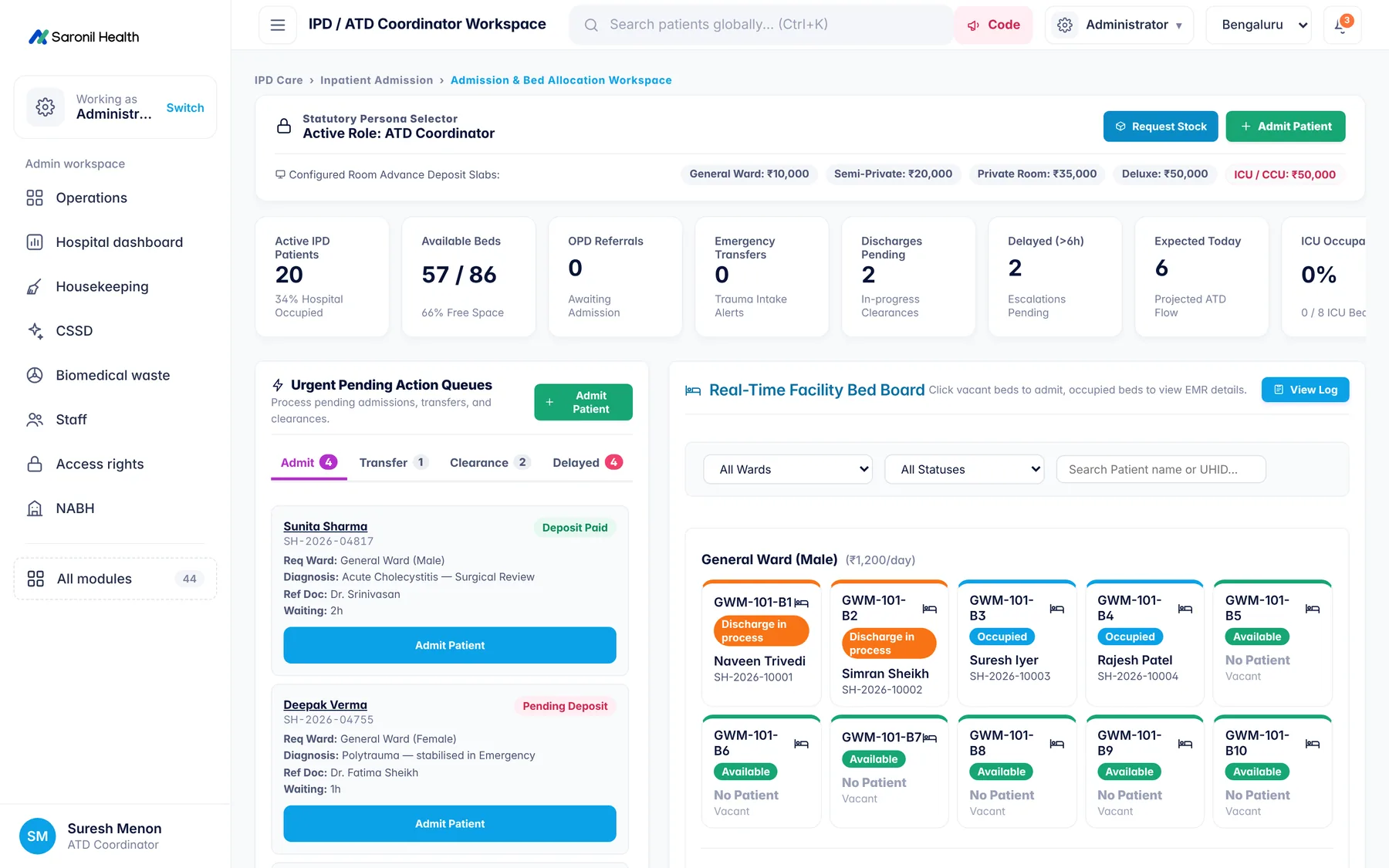
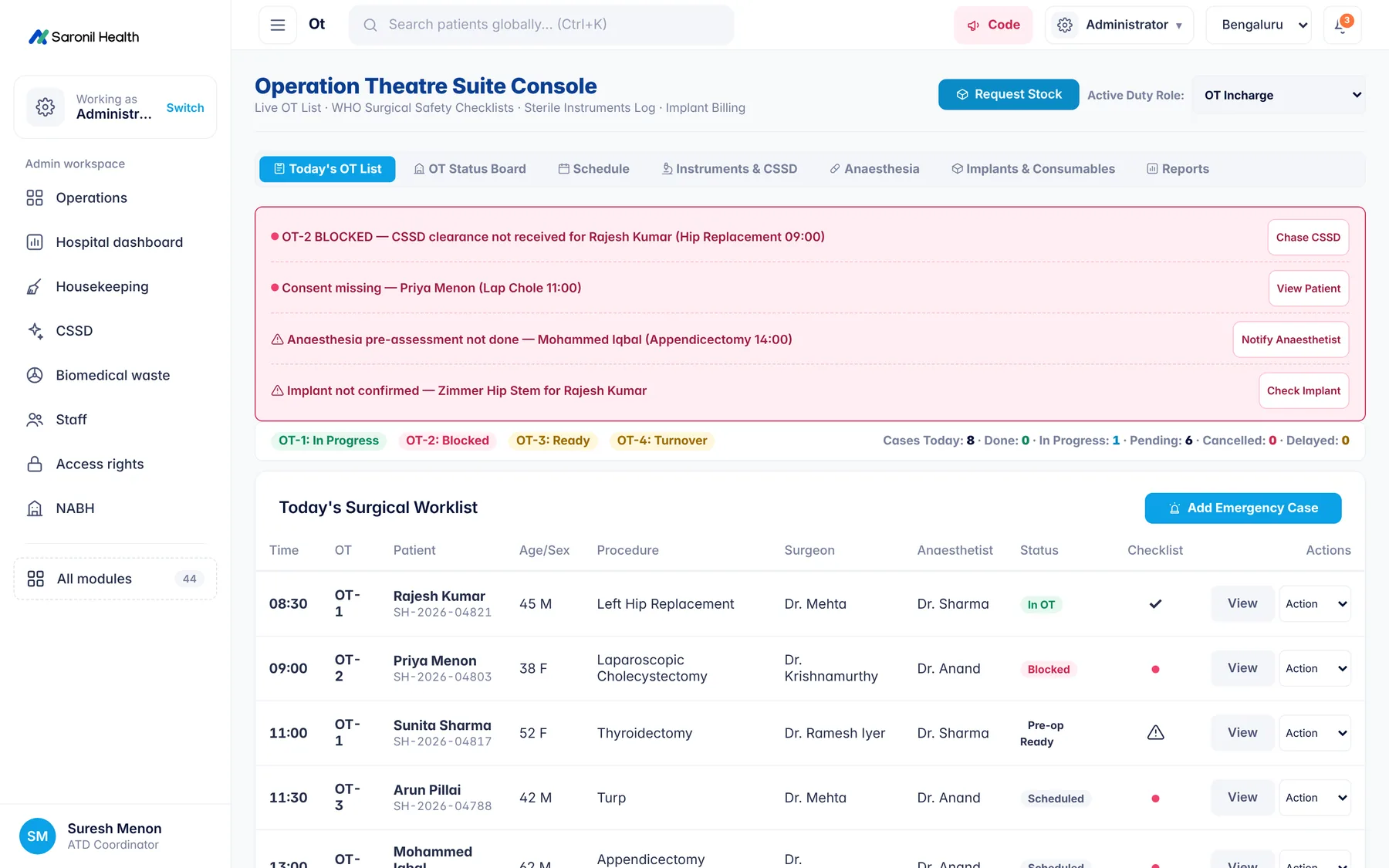
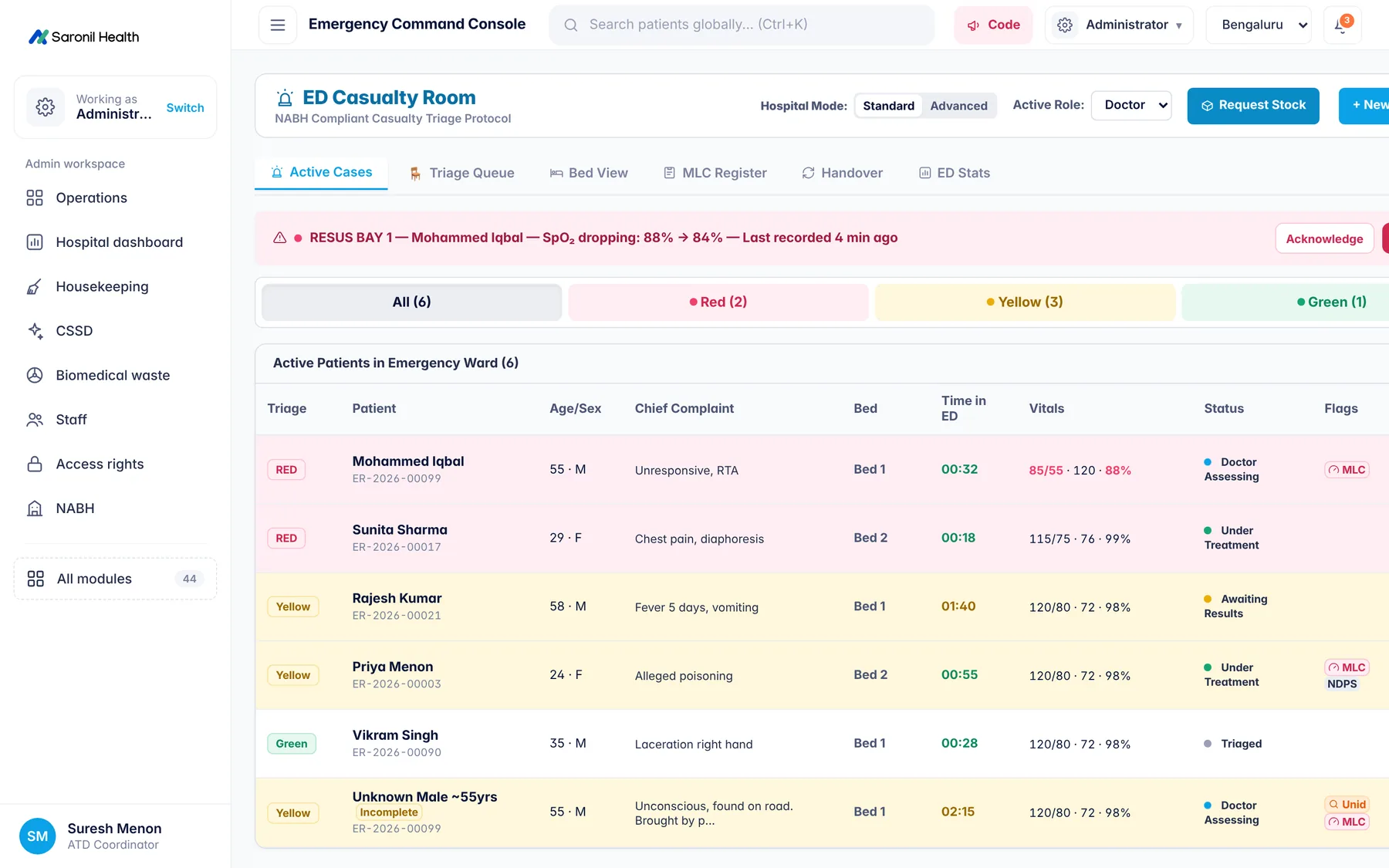
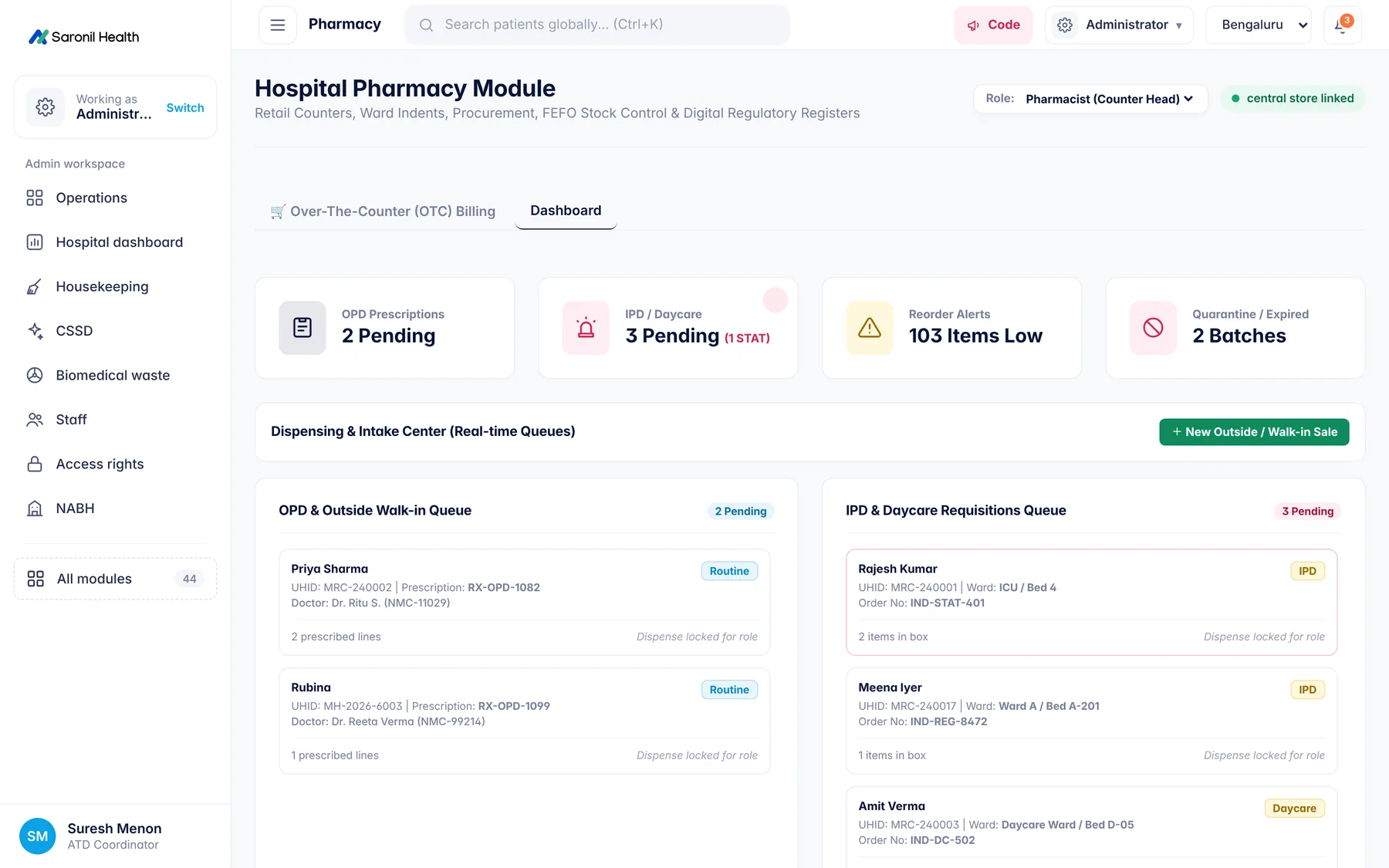
Hospitals judge software on the hard modules. These carry the most money, risk and daily load.
The full claims lifecycle, from pre authorisation to settlement, in one place.
A complete radiology information system, built as a standalone working prototype.
The full blood bank workflow, designed as one connected module.
A lab information system shaped around NABL workflows.
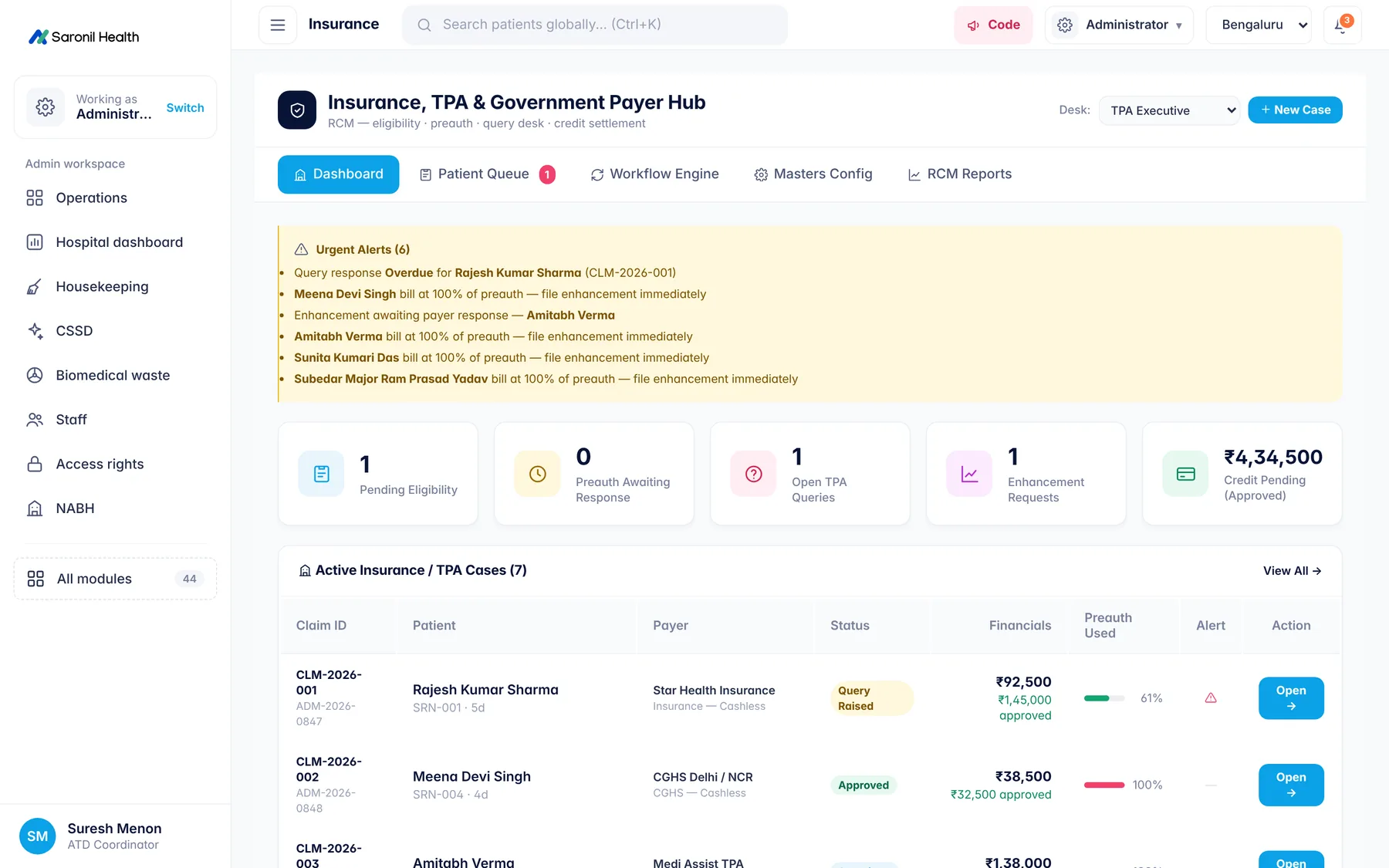
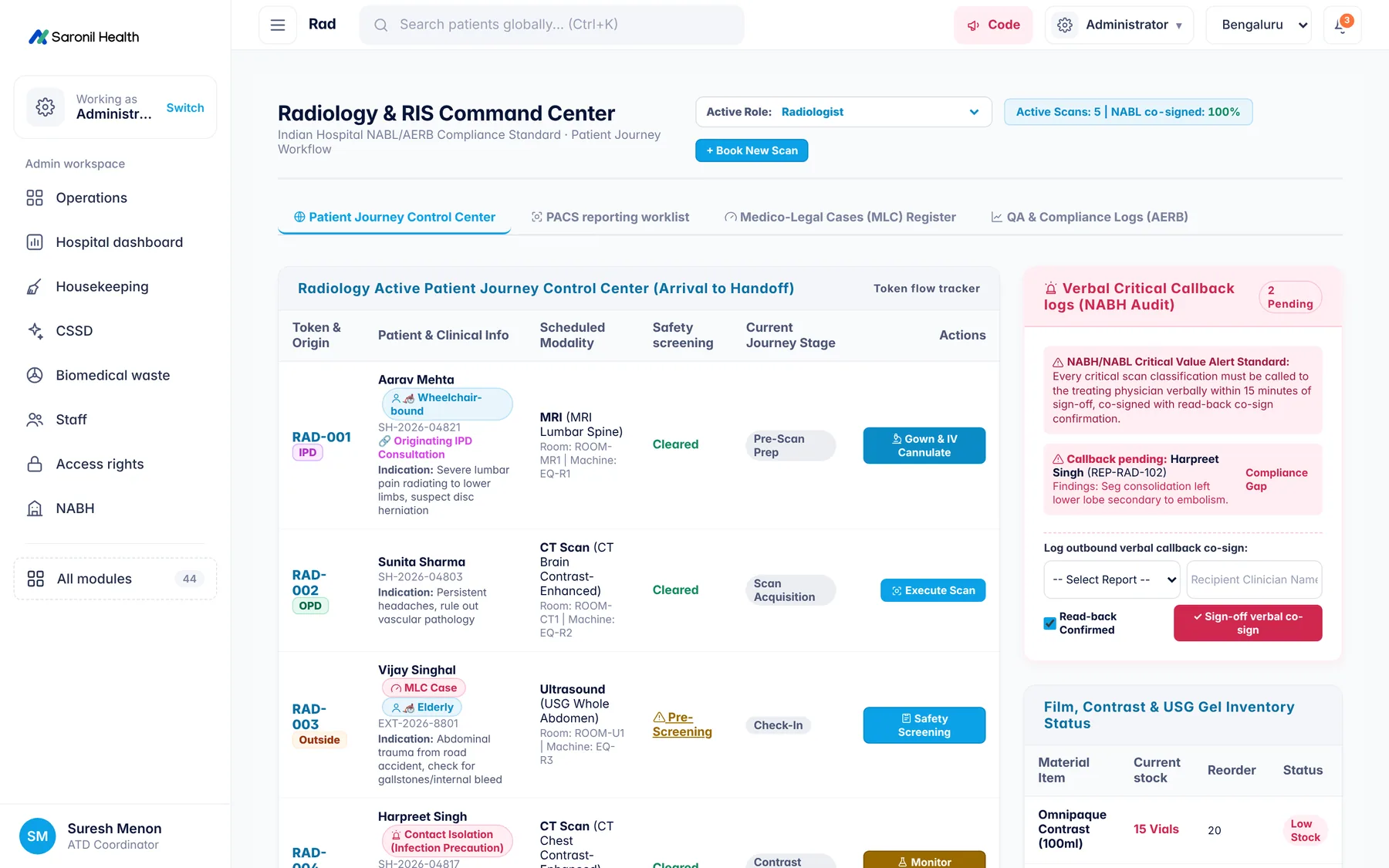
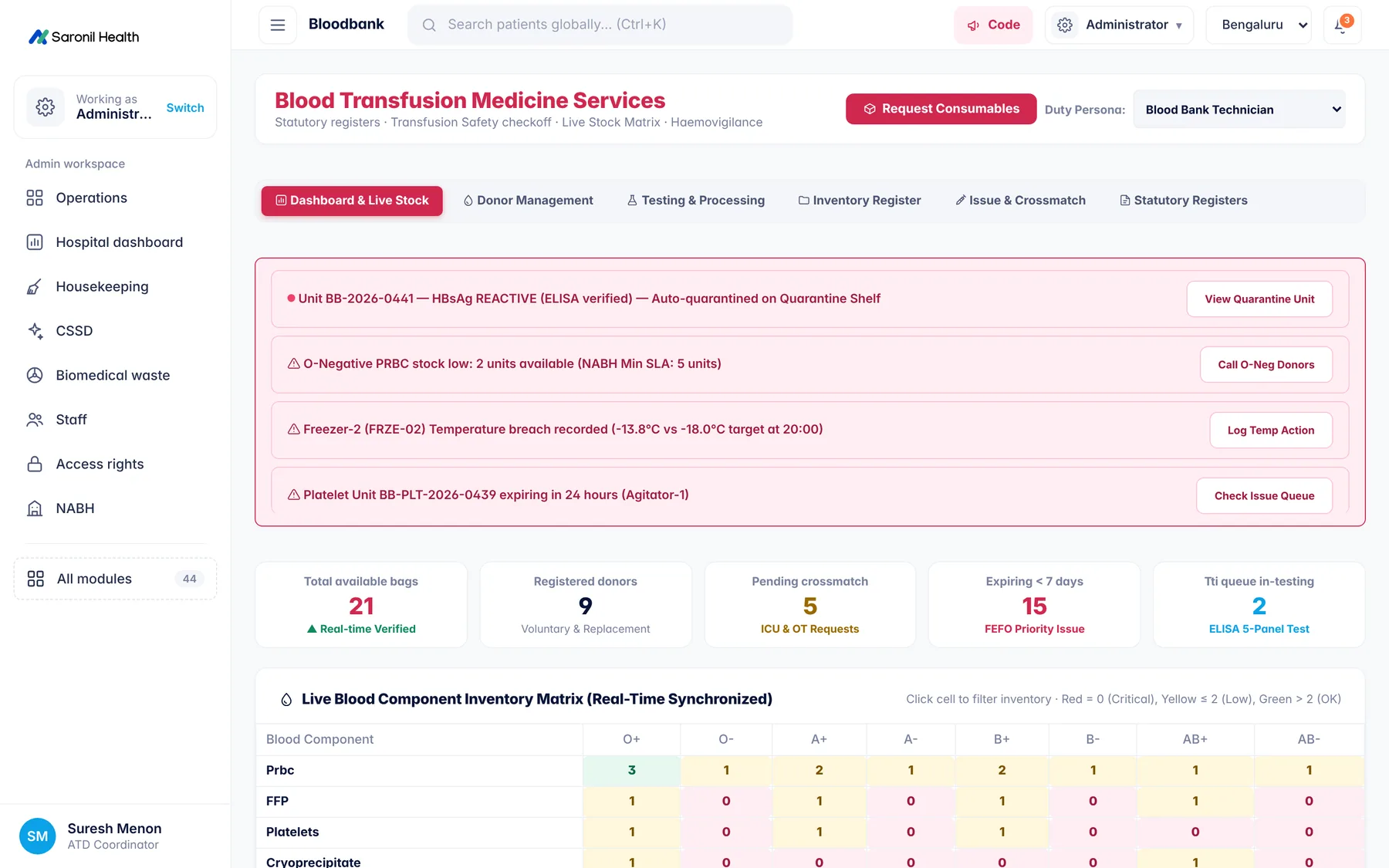
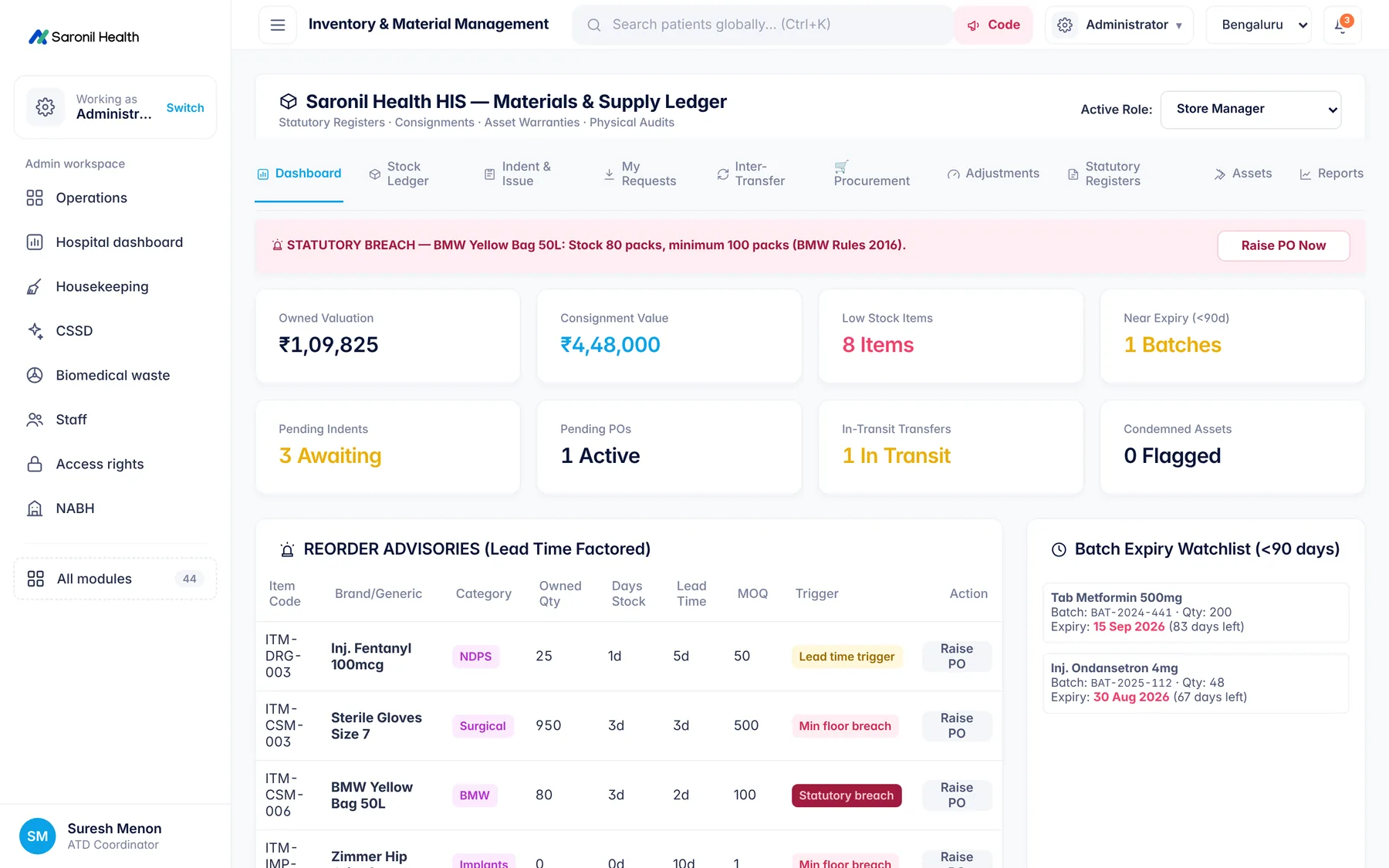
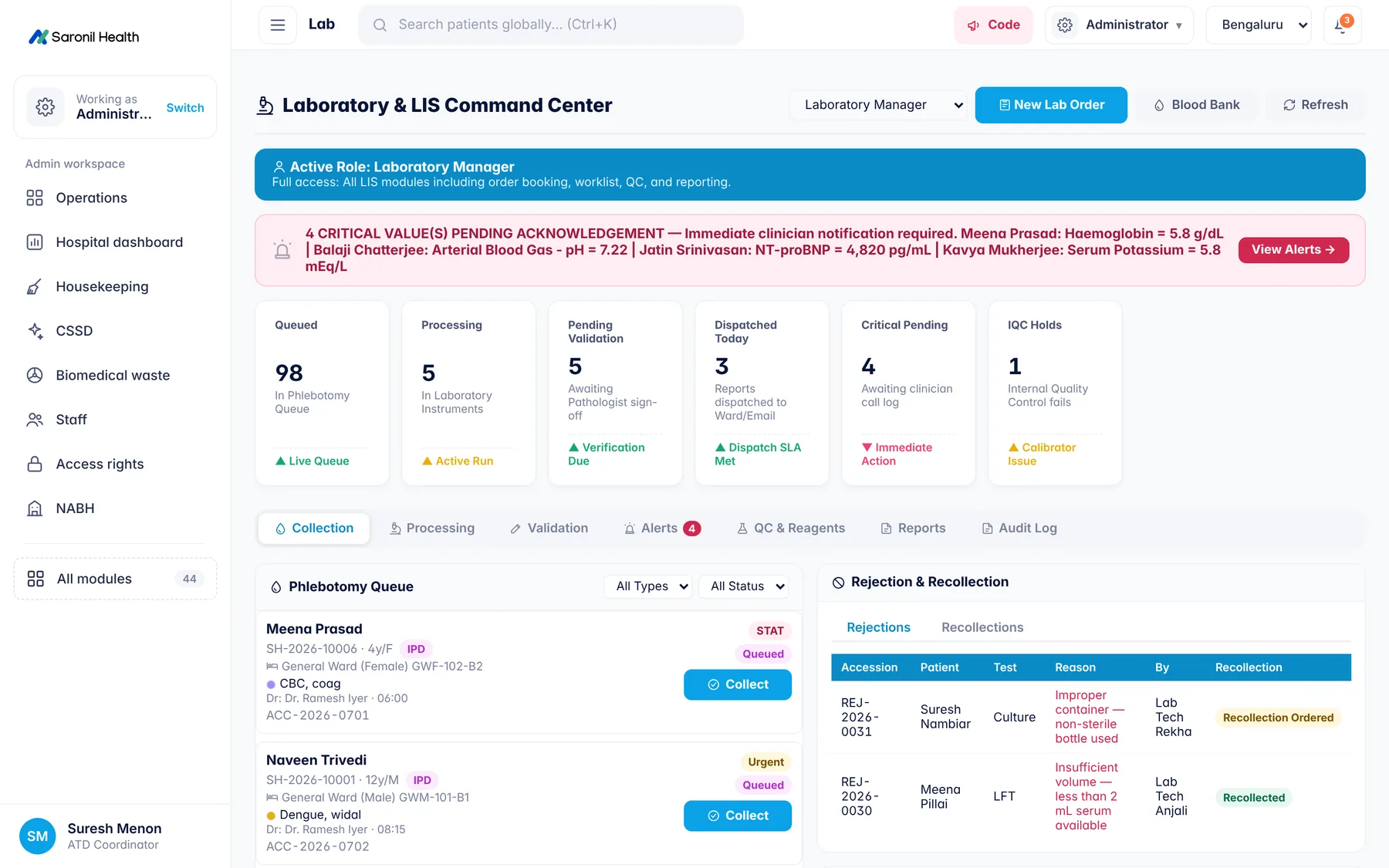
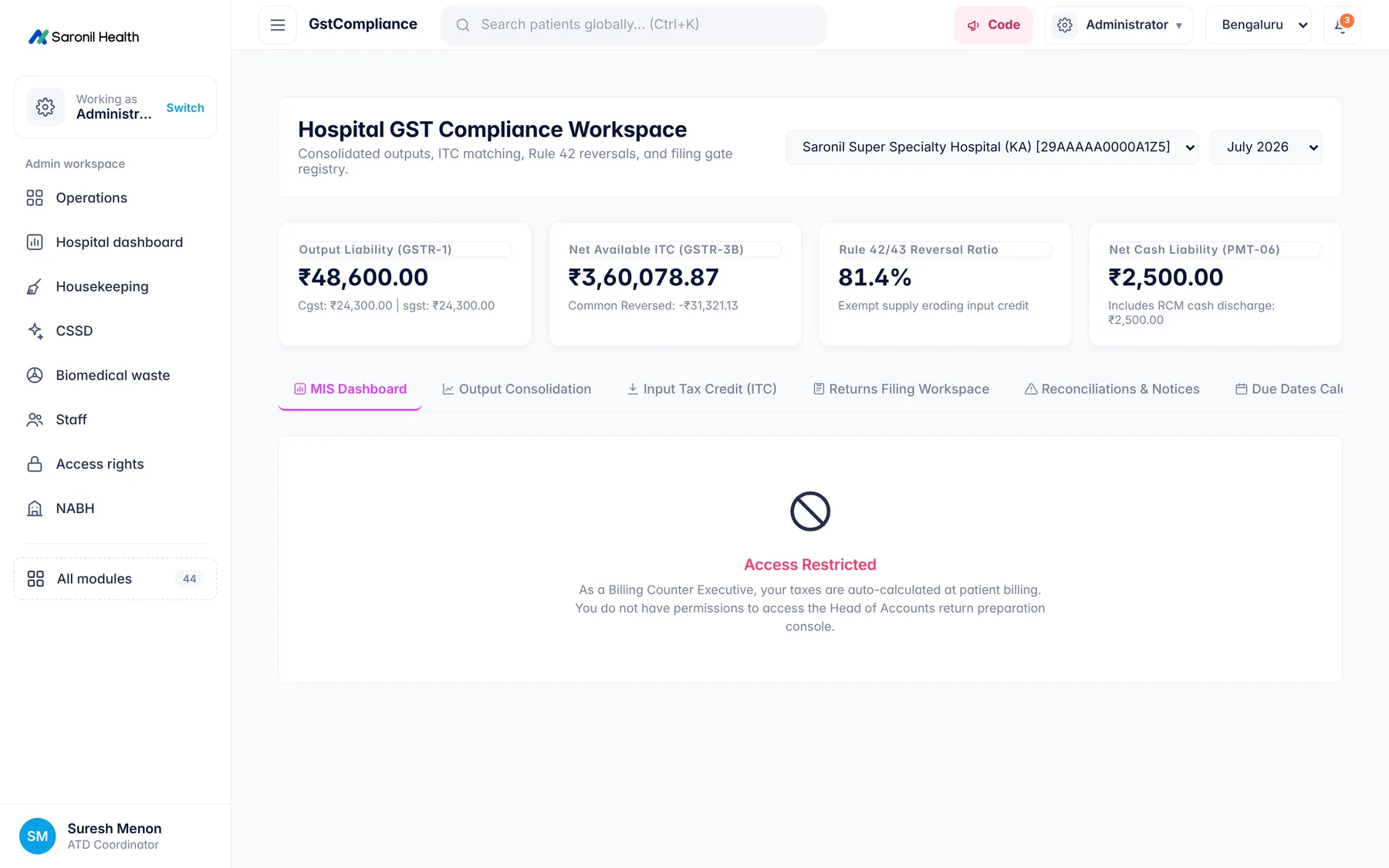
Indian regulation shapes the flows from day one, instead of being bolted on before launch.
Every prototype uses realistic UHID formats, ICD-10 codes, rupee billing and real TPA names, so hospitals see their own world.
Eight user types, from front desk to administrator, each with the dashboard and permissions their job needs.
FertiCare treats the couple as one record, the way fertility clinics actually work, with compliance for the ART Act.
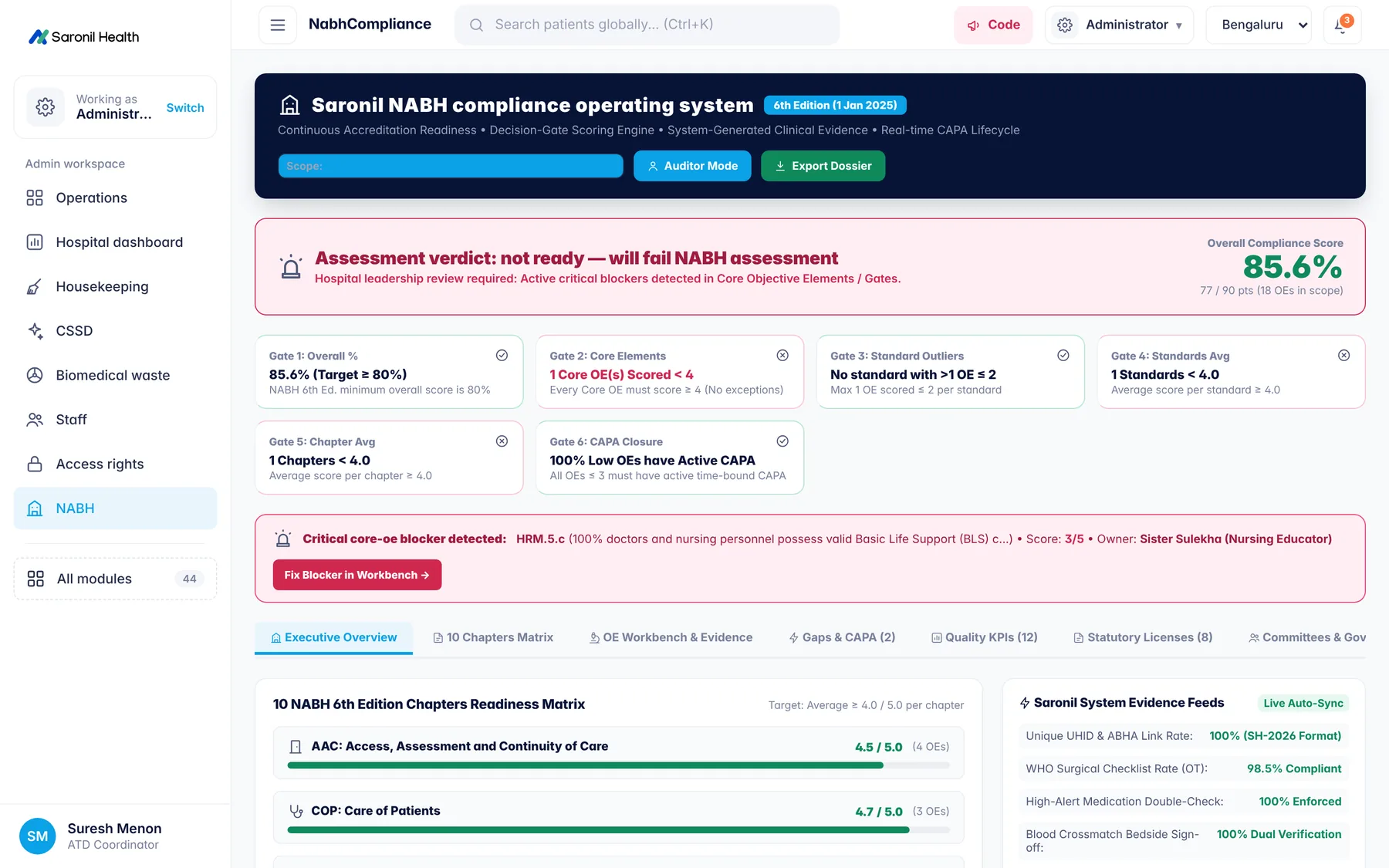
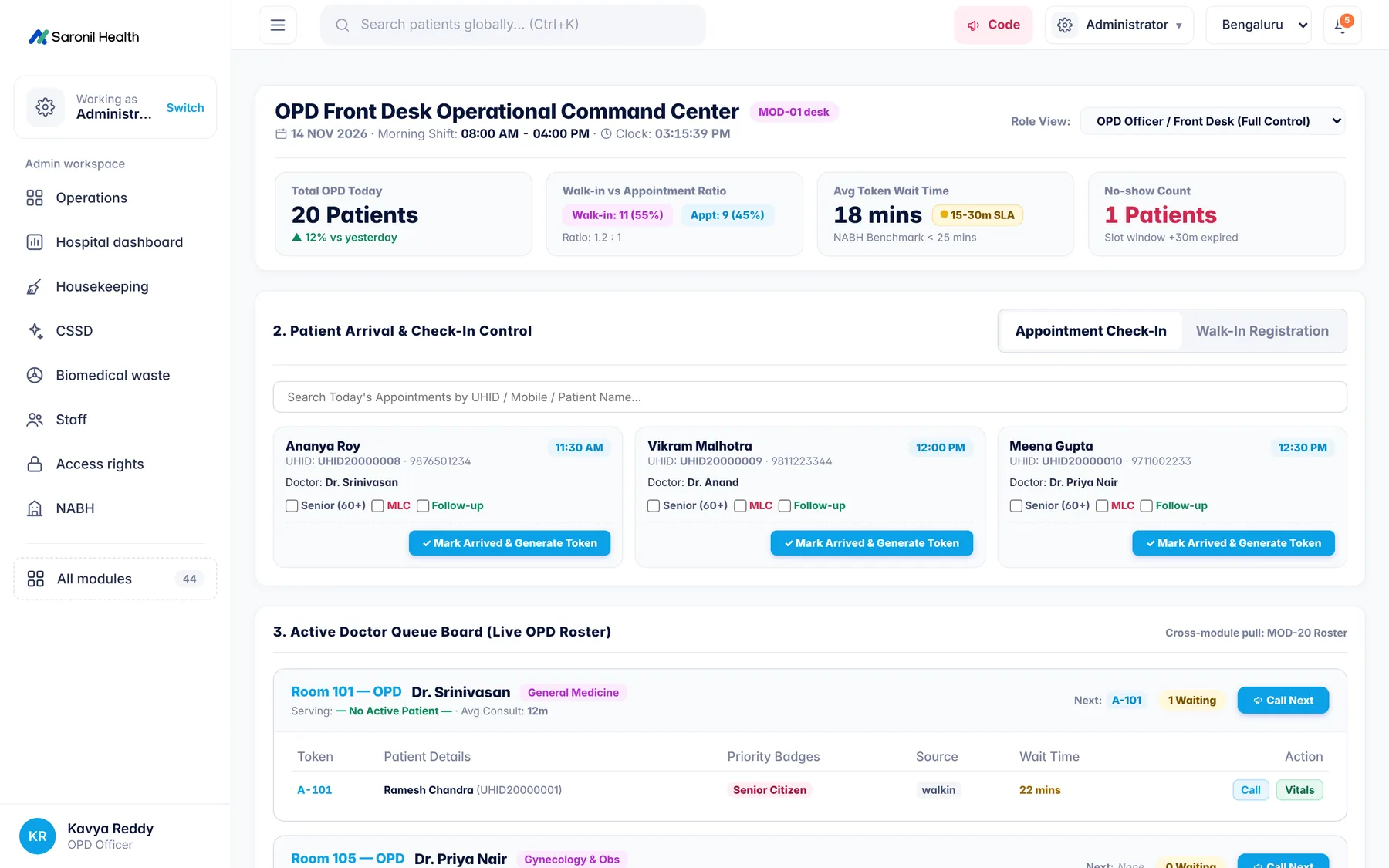
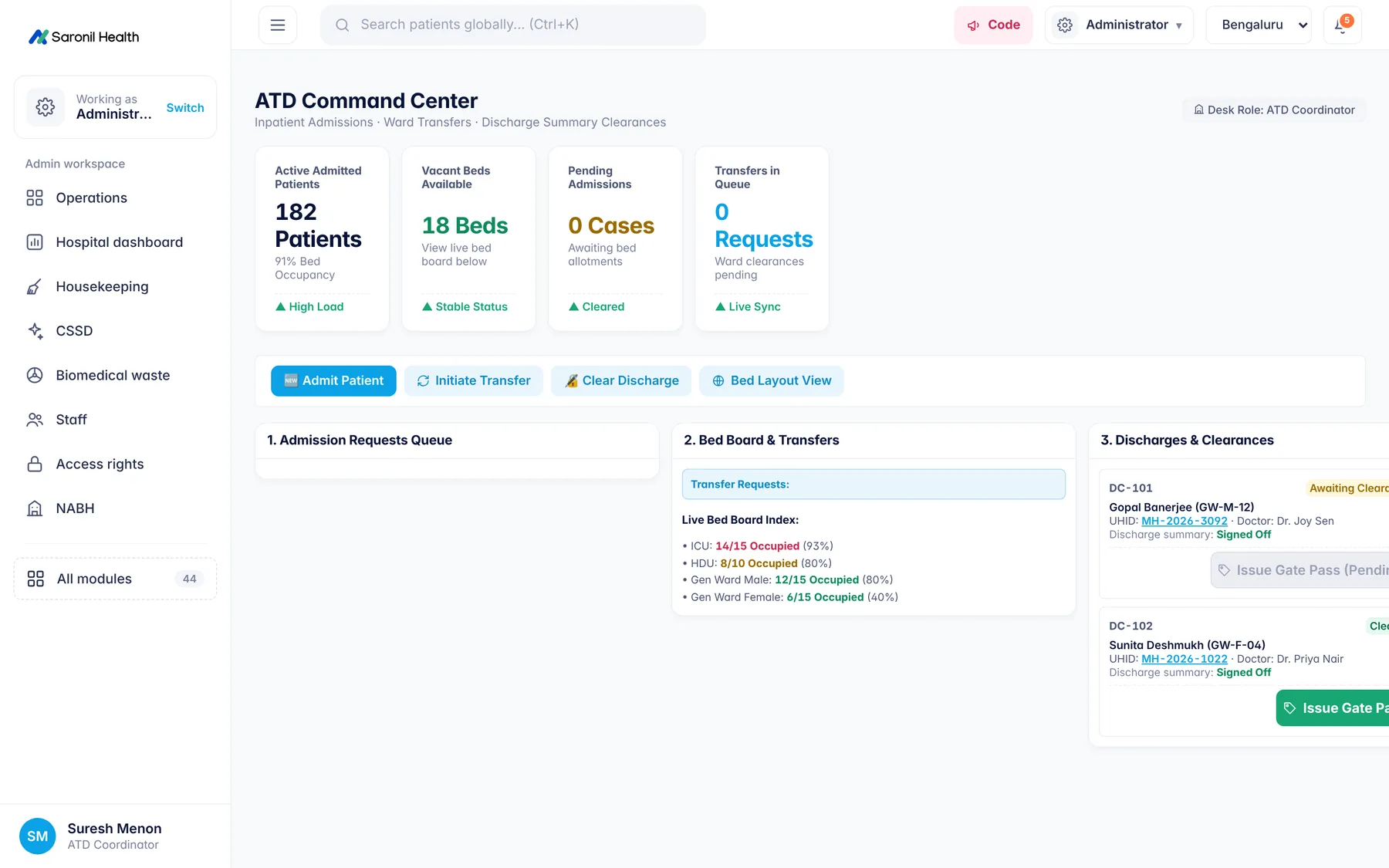
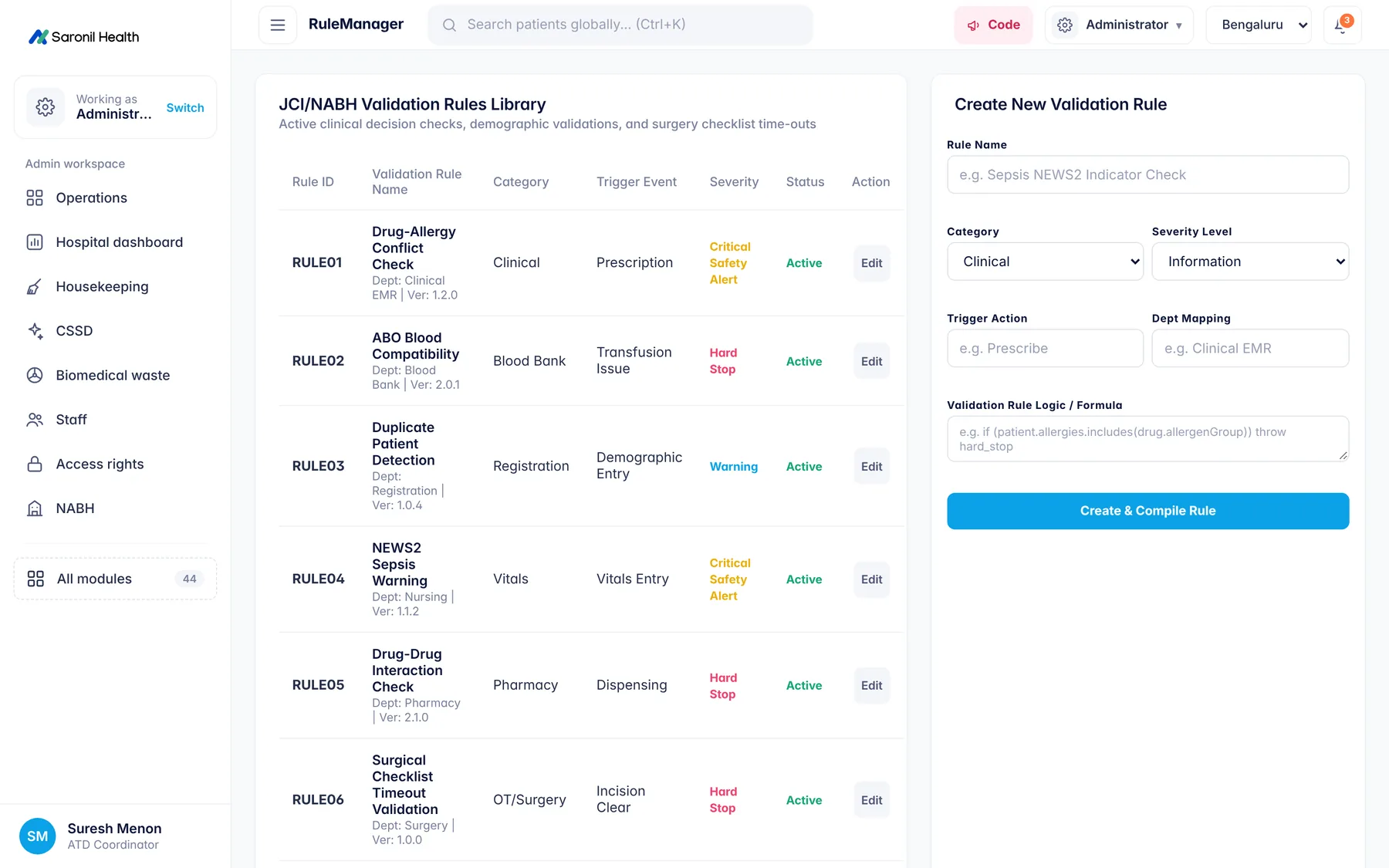
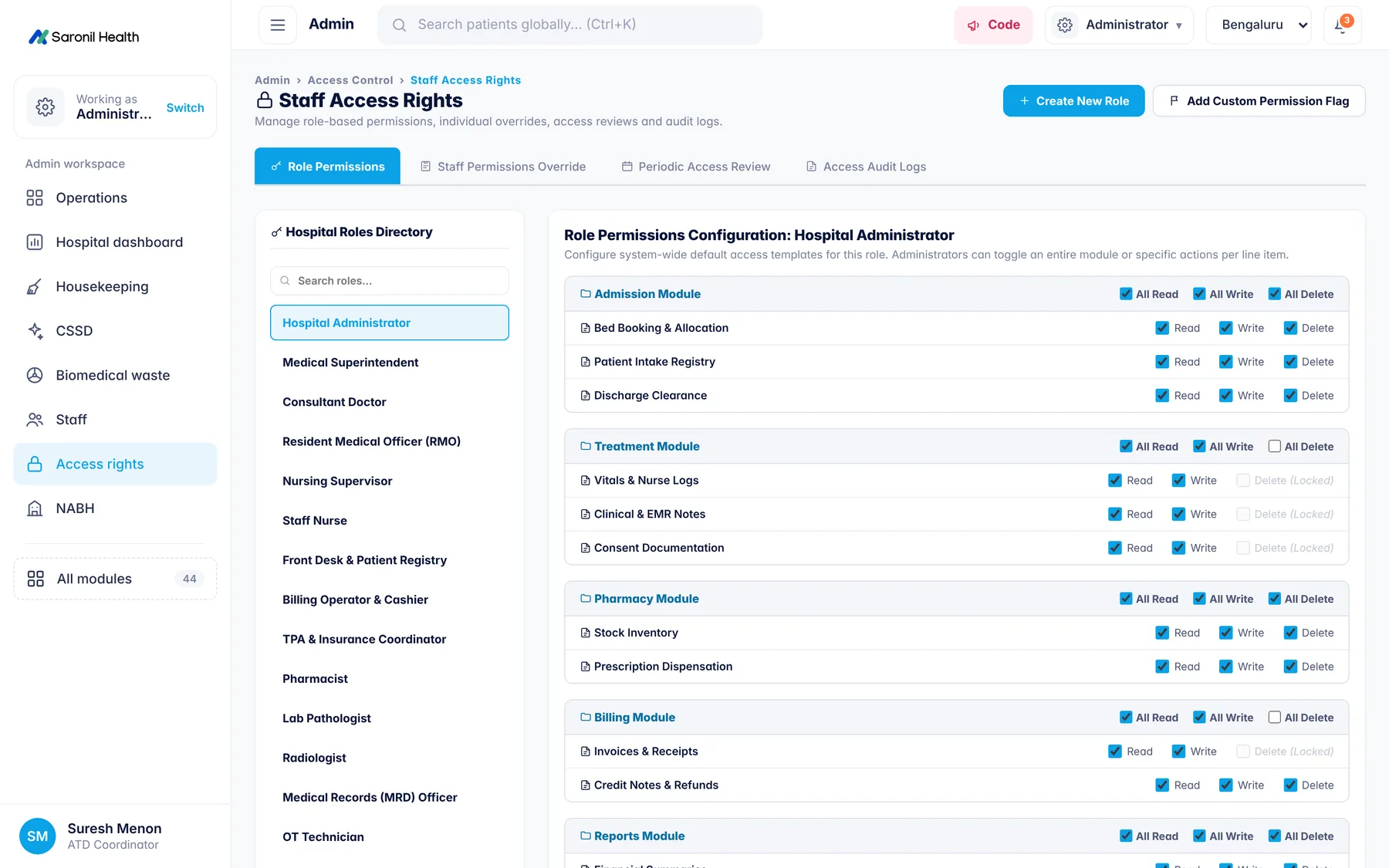
Every module starts with the same 8 part spec, so AI tools generate consistent, working products on one design system.
What it must achieve
Who sees and does what
The real path, step by step
Entities and fields that matter
What it talks to
Rules it must respect
What it must not do
How we know it works
Saronil is in active development. Working modules are already used in demos with doctors and hospital clients, alongside an 18 page marketing site written for hospital owners, CEOs and CFOs.
Saronil Health is an AI native hospital information system (HIS) and EMR for Indian private hospitals. One platform runs the whole hospital, from registration to discharge, across 28 modules in 10 domains, with Indian compliance built in.
Javed is co-founder and design lead. He owns the product architecture, the design system and AI powered prototyping, from the first spec to client demos.
Billing, pharmacy, stores, insurance and clinical modules share one source of truth, so services get billed, claims don't stall between departments and losses are easy to spot.
NABH, DPDP, ABDM, government health schemes and GST are designed into the workflows instead of being handled outside the software.
Javed writes structured specs that AI build tools turn into working, clickable modules, with the design system as a guardrail. More than 15 modules were built this way.
Fix UX friction, design AI that users trust, unlock up to 5x growth. Get a free UX assessment.